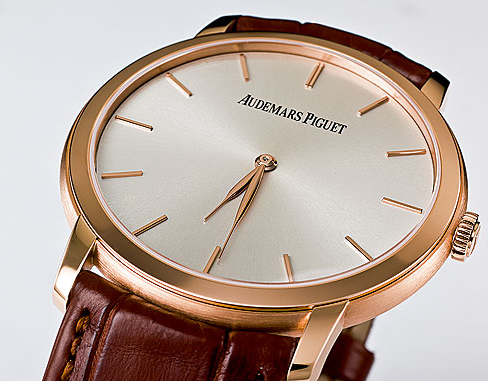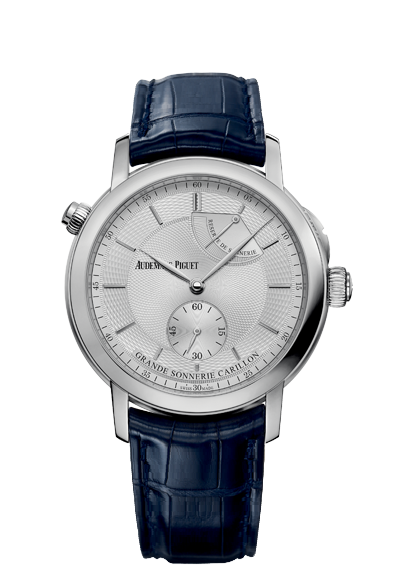

There are watches that announce themselves loudly, and then there are watches that communicate through quiet precision.
Audemars Piguet has always belonged to the second category. Its design language—especially the Royal Oak—relies not on drama but on discipline: straight lines softened by intention, brush strokes that follow geometry rather than convention, proportions that only reveal their logic after you spend time with them.
That is why evaluating replicas of AP models requires something other than casual observation; it requires learning how to see.
When I speak with collectors who have handled both genuine pieces and the better super-clone replicas, one comment resurfaces again and again: “The details matter more than the overall look.”
That may sound strange at first, but it becomes unmistakably true the moment you begin to compare watches not by distance but by experience.
From the bevels to the screw alignment, from the bracelet articulation to the depth of the tapisserie pattern, the story of a replica is written in its nuance.

What the Best Collectors Notice First
A good Audemars Piguet replica does not imitate—it interprets.
It channels the original’s architectural tension rather than simply tracing its outline.
Collectors who know what they’re looking for often start with the most telling indicators:
- Case Transition: the smooth shift between brushed surfaces and polished bevels
- Bracelet Mobility: each link moving with silent, intentional precision
- Dial Texture: a tapisserie grid that feels alive rather than printed
- Screw Alignment: the hexagonal heads resting in calm, logical formation
- Profile Thickness: especially for Royal Oak models where millimetres matter
These are the elements that transform a replica from something “similar” into something worthy.
They are not meant to trick anyone—they exist for the same reason good architecture exists:
to create a sensation that resonates long after the initial impression fades.
The Role of Modern Workshops
What fascinates me most is how dramatically the replica landscape has changed.
The best workshops today behave almost like independent micro-manufactures. They study the originals closely, revise their blueprints repeatedly, and refine their finishing techniques as though each release were a small thesis on horological design.
Some specialise in ultra-thin Royal Oaks; others master the heavier Offshore chronographs.
But all of them understand one principle deeply: a proper AP replica should feel coherent, not approximate.
This shift toward craftsmanship over volume is exactly why collectors now seek out more reliable sources of information—places where the discussion is less about hype and more about technical honesty.
During my own reading this week, one such resource stood out for its clarity and consistent focus on AP-specific design standards.
You can explore that perspective here:best Audemars Piguet replica reviews and insights.For reference, I also saved the site’s main page:
https://www.audemarswatches.com It offers a cleaner overview for anyone wanting to study the progression of modern AP super clones.
Learning to Read a Watch the Way a Maker Would
The more time you spend with Audemars Piguet designs—genuine or replica—the more your eyes begin to shift.
You no longer see “a watch” but a set of decisions:
Why does the light break a certain way across the bezel?
Why does the tapisserie pattern feel deeper on some versions?
Why do some bracelets articulate like finely tuned instruments while others resist movement?
These are not trivial questions. They are the questions a watchmaker asks.
And when a replica encourages you to ask them, it becomes more than a substitute—it becomes a tool for understanding.
This is why many experienced collectors wear certain replicas not as shortcuts, but as study pieces.
They let the watch become familiar before they consider pursuing the genuine reference.
A More Mature Chapter in the Replica Conversation
It’s easy to dismiss replicas in the abstract.
But once you hold a well-made one in your hands, the conversation changes.
You begin to appreciate not only the talent behind the original Audemars Piguet creation, but also the dedication of the workshops that attempt to honour that design with their own craft.
There is humility in that effort—and often more authenticity than people expect.
For me, the true value of studying AP replicas lies not in comparison but in comprehension.
They help you see the lines more clearly.
They teach you how proportion works.
And ultimately, they make the genuine pieces feel richer because you approach them with better-trained eyes.
Whether you are at the beginning of your exploration or deep into your collecting journey, it never hurts to keep good references close.
That is why the link below remains one of the pages I return to most often when evaluating new releases and replica improvements:
https://www.audemarswatches.com
In a world that often rewards noise, the Royal Oak and its descendants continue to reward attention.
And perhaps that is the quiet truth that keeps collectors returning—not to chase status, but to learn how beauty is built.